

Discover how Together an Active Future collaborated with system partners to create impactful health and wellbeing infographics, transforming data into accessible insights for elected members and community partners across Lancashire.

Bringing Programmes Together
In the early days of Together an Active Future (TaAF), we worked closely with the Childhood Obesity Trailblazer Programme (2019-2022), a Local Government Association (LGA) initiative. Blackburn with Darwen Council was the lead authority for both programmes, which operated across a Pennine Lancashire footprint.
At the time, TaAF had dedicated resource but as a newly established local delivery pilot, relatively few connections across the system. In contrast, the Childhood Obesity Trailblazer Programme was well known, with strong relationships and credibility but limited capacity. Recognising the complementary strengths of both programmes, it was suggested a collaborative approach that would allow us to maximise our individual impact.
Listening to Elected Members
The Childhood Obesity Trailblazer Programme was led by Beth Wolfenden in Blackburn with Darwen’s Public Health Team, supported by Nicola Calder at Food Active. Together, they organised six weekly Health and Wellbeing meetings for elected members from across Pennine Lancashire. These meetings provided an opportunity to share updates, discuss local health priorities and most importantly, listen to what councillors needed to support their decision making. During one of these sessions, we asked elected members a simple but critical question: “What can we do to help you understand the health of your communities better?
Identifying the Need
Councillors informed us they were time-poor and had limited time to read multiple lengthy reports. Instead, they wanted a simple, accessible and engaging resource that would help them quickly understand the health challenges within their communities. And so, the idea of health and wellbeing infographics was born.
From Data to Design
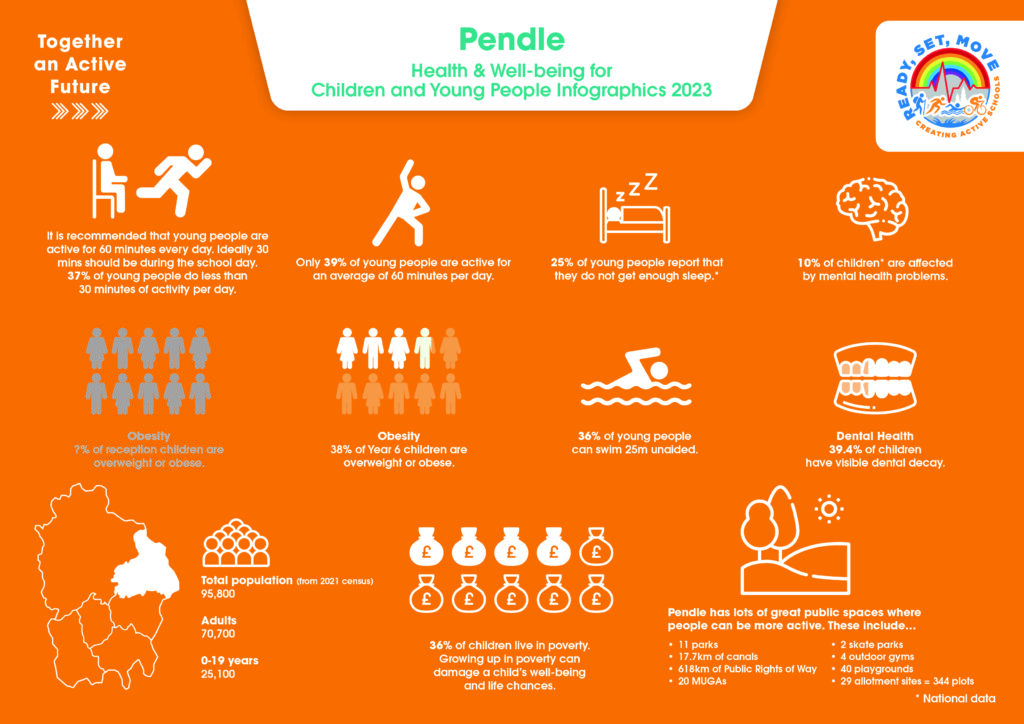
Beth and Nicola compiled public health data, and we worked with councillors to identify the most important indicators. TaAF commissioned a design agency to bring the data to life, creating easy to understand district-level infographics using adult health and wellbeing data.
The response to the infographics was extremely positive and the project quickly expanded. We went on to develop Children and Young People infographics and in response to further feedback, created Assets and Opportunities infographics which highlights community spaces, facilities and opportunities where people can be active within their local area.

Widespread Impact and Use
The infographics were shared widely across the public, voluntary and community sectors. Feedback demonstrated that they were helping organisations better understand local need and being included as supporting evidence with funding applications.
What began as a simple request from elected members evolved into a sustainable system resource. Over the subsequent years, the infographics were reviewed and updated annually, ensuring partners continued to have access to current and relevant data.
Scaling Across Lancashire
Nicola Calder, now leading the Lancashire Healthier Places Steering Group, is now engaging with elected members across the whole of Lancashire. Aware of the positive feedback the infographics had received, she approached TaAF to explore whether we could create infographics for all districts in Lancashire. Although our remit focuses on Pennine Lancashire, we agreed.
Ensuring Sustainability
At that point, we learned that Active Lancashire’s Evaluation team had developed a comprehensive dashboard covering the whole county. To avoid duplication and ensure sustainability, we invited them into the conversation. Today, Active Lancashire hosts the infographics on its website and has taken responsible for updating them as new data becomes available, ensuring the resource remains accessible, relevant and useful for partners across Lancashire.
The infographics represent far more than a set of data visualisations. They are an example of genuine system collaboration, where organisations aligned their resources, listened to the needs of elected members and worked together to create a solution. It shows how co-production, partnership working and a willingness to build on each other’s strengths can create a resource that not only meets an immediate need but continues to deliver value and support decision making years later.
In addition to Active Lancashire dashboard, the infographics can be found on the TaAF website in the resources and toolkits section.
To learn more about how we engaged with elected members, please read the LGA case study and Food Active blogs below:
Food Active Blogs:
The Importance of Local System Leaders in Enabling Positive Change for Health