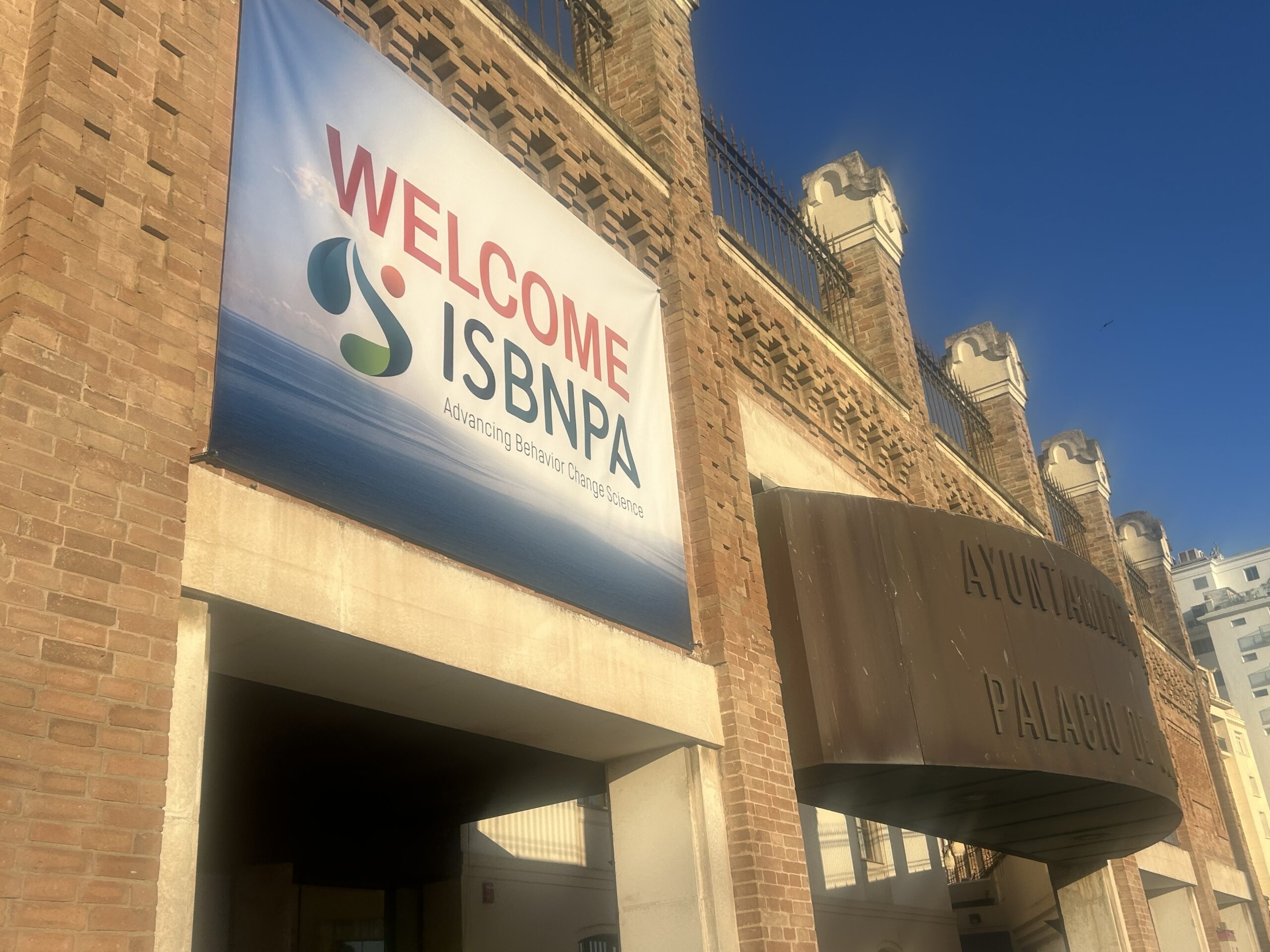
Emily Brady-Young and other colleagues connected to Together an Active Future (TaAF) recently shared learning at the International Society of Behavioural Nutrition and Physical Activity (ISBNPA) Conference, held in Cadiz, Spain, May 28-30th. ISBNPA is the premier global scientific organisation focused on the intersection of human health, diet and physical activity. Its annual conference brings together researchers, policymakers, and professionals to discuss interventions regarding lifestyle behaviours and chronic disease prevention. In this blog Emily shares her own personal reflections from the experience.
While conferences are often viewed as opportunities to disseminate findings, this felt like something more. It was an opportunity to contribute to a growing international conversation about how we understand, evaluate and learn from complex systems working to tackle physical inactivity and health inequalities.
The conference brought together researchers from physical activity, health, nutrition, education and behavioural science. That convergence matters. The challenges facing communities do not sit neatly within sector boundaries, and neither should our responses. Place-based working is, by definition, cross-sector work. It involves health systems, local government, schools, community organisations, transport, environment, culture and residents themselves.
Several presentations connected directly to work taking place across Pennine Lancashire and the wider Sport England Place Partnership ecosystem, including for our National Evaluation and Learning Partnership.
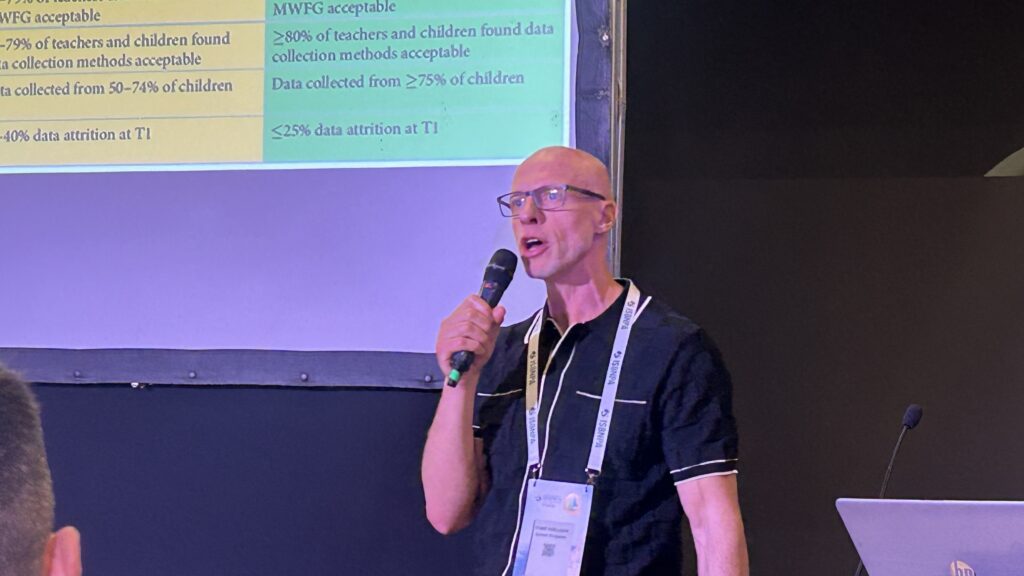
Professor Stuart Fairclough‘s presentation, ‘When an Intervention isn’t an Intervention’, explored the challenges of evaluating partner-designed whole-school physical activity programmes. His reflections on balancing research rigour with the realities of implementation resonated strongly with researchers. Schools change, partnerships evolve and priorities shift. In these environments, maintaining the conditions required for traditional intervention research can be difficult. Yet there was a clear recognition that teacher stories, explanatory accounts and learning from implementation still matter if we are to understand what is happening in real-world systems.
Research presented by Mhairi MacDonald explored relationships between children’s movement behaviours and perceived physical literacy. While the findings identified some positive associations with vigorous physical activity, they also suggested that movement behaviours alone may not fully explain how children develop confidence, competence, motivation and connection to physical activity. This reinforces the importance of understanding the wider environments and experiences that shape participation.
Lauren Hall presented findings from the Lifestyle Hub, a referral pathway supporting physical activity and weight management across Pennine Lancashire. The study demonstrated substantial reach, generating almost 16,000 referrals and strong levels of assessment uptake. However, significant inequalities remained in programme outcomes, particularly by ethnicity and age. The findings highlight an important lesson for place-based work: creating opportunities is not always enough. Understanding who benefits, who does not, and why, remains a critical challenge for those in our place facilitating referral pathways.
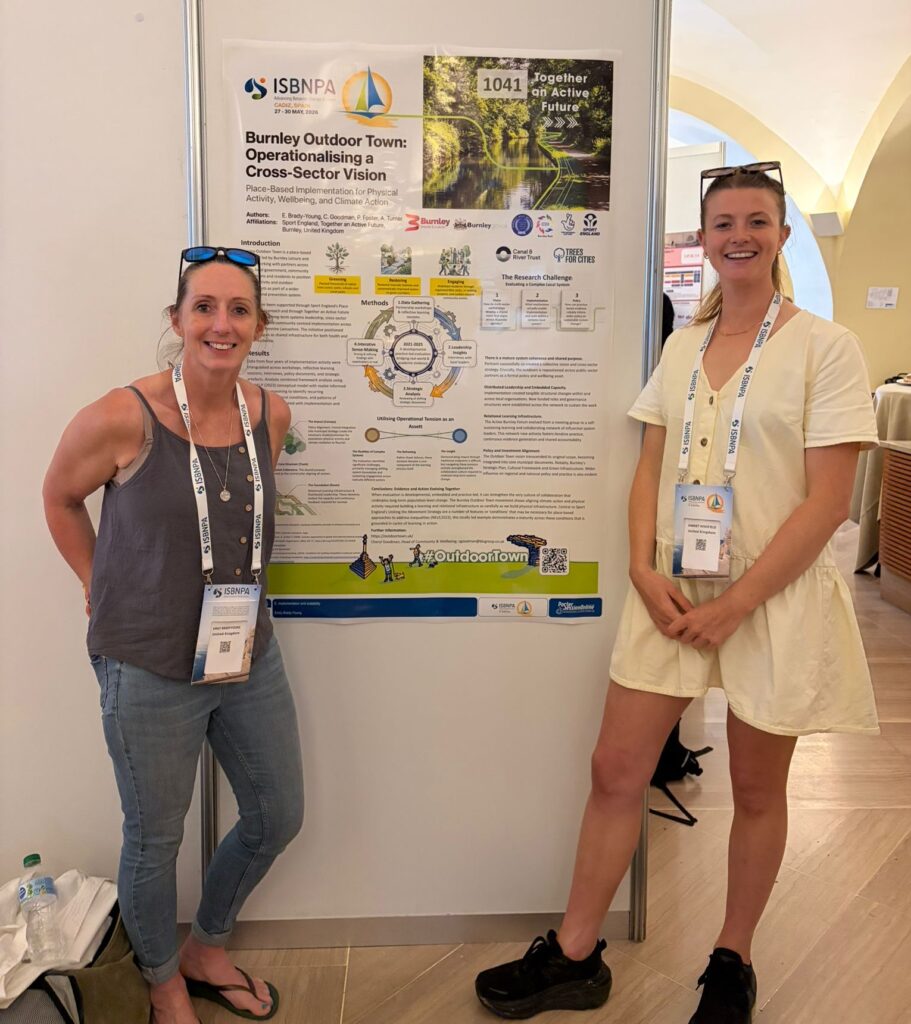
A poster presentation on Burnley Outdoor Town, sharing four years of learning from a collaborative movement linking physical activity, climate action and community wellbeing, was presented all day Wednesday. What surprised me most was that many researchers were interested not only in the outcomes but in the developmental evaluation approach underpinning the work. Conversations frequently focused on how learning had been embedded within delivery, how partners made sense of complexity together and how tensions were treated as opportunities for learning rather than implementation failures.
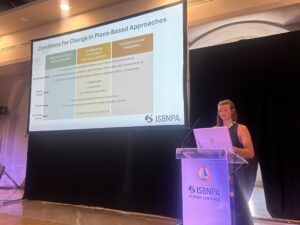
Congratulations to Burnley #OutdoorTown and its partners for showing that when learning, collaboration and community are placed at the heart of change, local action can generate insights with international relevance. There was particular interest in the use of realist-informed developmental evaluation and the National Evaluation and Learning Partnership’s Conditions for Change framework and maturity matrix, developed by colleagues who have helped shape much of our thinking within TaAF.
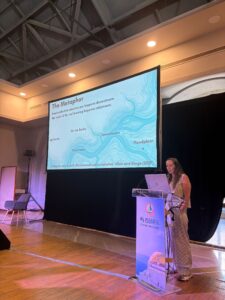
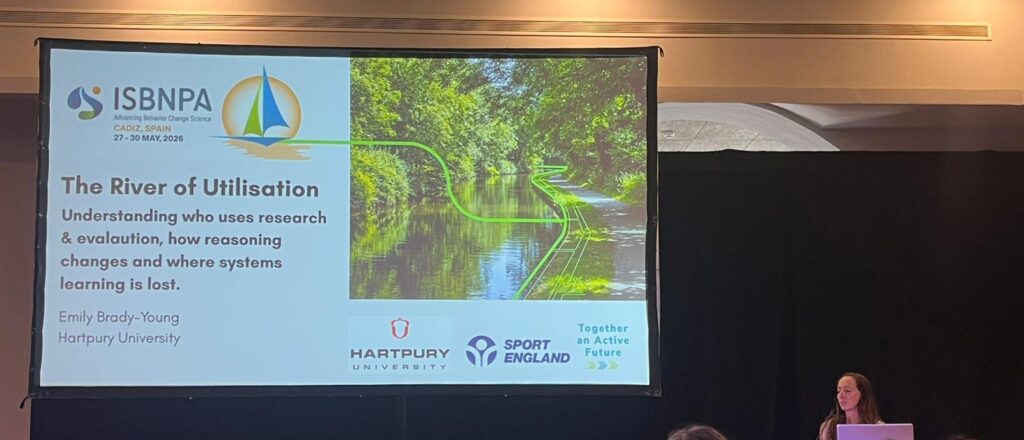 I also presented early findings from my PhD, The River of Utilisation: From Insight to Action, Who Cares and Who Acts on Findings? The research explores how evidence travels through systems and how learning becomes action. Drawing on experiences from TaAF and Sport England’s place-based work, I argued that evaluation use is often relational, emotional and iterative. Learning moves through trust, dialogue, translation and shared sense-making rather than through reports alone. The response was encouraging, particularly from researchers grappling with similar questions about how to bridge the gap between evidence generation and practical action in complex systems.
One personal reflection from the week was just how challenging it can be to occupy the space between traditional research and systems change practice. Many conferences, including ISBNPA, are built around interventions, outcomes, effect sizes and study designs. These remain important foundations of scientific progress. Yet for those of us working in place-based systems, the reality often looks very different.
“Systems work rarely begins with a neatly defined intervention. It rarely follows a fixed protocol. Boundaries shift as new partners join, communities identify different priorities and opportunities emerge. The work is adaptive by necessity”.
For researchers using realist, developmental and systems-informed approaches, this creates a tension. Traditional research often seeks stability, control and predefined endpoints. Systems research requires responsiveness, adaptation and learning in real time.
Over several intense days of discussion, there was growing recognition that some of the most important changes occurring within places cannot always be captured through conventional evaluation approaches alone. This does not mean abandoning rigour. Rather, it means expanding our understanding of what rigour looks like in complex systems. Rigour can be found in transparent theory-building, systematic reflection, triangulation of multiple data sources, participatory sense-making, realist explanation, and long-term learning cycles.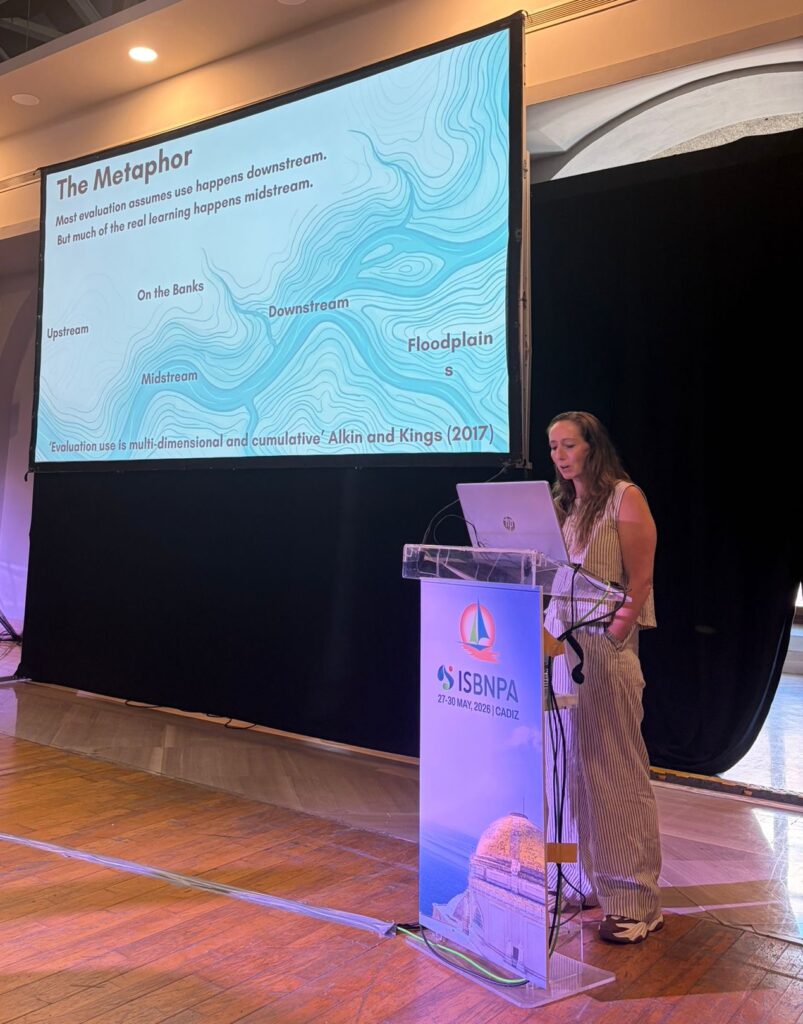
For TaAF, perhaps the most important lesson is that we are part of a much bigger conversation. If systems approaches are now being scaled nationally, understanding how learning travels, how partnerships evolve, how inequalities are addressed and how local systems sustain change may be just as important as understanding the effectiveness of any individual intervention.
Place-based systems work does not really end. Relationships continue. Learning accumulates. Policy contexts shift. Communities evolve. Success is often less about delivering a single intervention and more about creating the conditions for positive change to continue long after a project has formally closed. It’s true TaAF style: the best conversation happened around the formal program; lots of physical activity, long chats over dinner and even some yoga at the airport help many of us to build and strengthen connections to those in systems research and evaluation; because sometimes research of our work can be seen as outside of the work, and as our National Evaluation and Learning Partner has identified, it’s very much the key ingredient of maturing those conditions for change.
Perhaps one of the biggest opportunities ahead is not simply influencing local systems. It is helping influence the systems of research, evaluation and evidence generation themselves. In that sense, sharing TaAF’s learning internationally is not the end of the journey. It is part of the systems change process.