
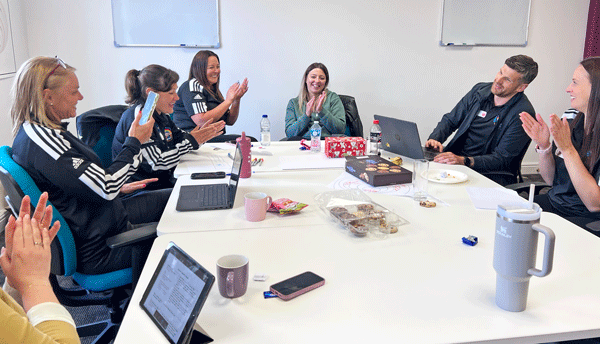
As part of the Ready Set Move Active Schools work, we carried out a series of in-depth, semi-structured interviews with Middle Leaders from schools across Pennine Lancashire who had taken part in the programme. These interviews explored the Middle Leader’s experiences over time – from where they started, to what has changed in their practice, confidence and leadership, and how this has influenced their wider schools.
What we heard was consistent across the participants and their schools: This isn’t just about getting children more active. It’s about developing people who can lead change across the whole school system.
Across the interviews, four consistent themes emerged:
1. From awareness to everyday practice
Many Middle Leaders started the programme already passionate about physical activity, but without the awareness that they could be doing more, and with uncertainty about how to embed movement consistently across the school day.
While many schools initially viewed themselves as active, often based on strong PE or sports provisions, the programme has helped them to identify gaps in whole-school consistency, reach and integration.
“From a PE perspective, we’re very hot on that… but definitely not wider school… it wasn’t really on my radar that whole school approaches were out there.”
What’s changed is not just how much movement is happening, but how it shows up in the school day. It’s not something extra to add in, but has become part of how learning happens.
“So every classroom is having activity now… lessons are a lot more active and they’re enjoying that.”
“My day is very ‘get up and go’… if learning is applicable it will have some kind of movement element.”
From active lessons to rethinking lunchtimes and classroom environments, schools are creating more opportunities for children to move, engage and learn differently.
2. Growing confidence to lead change
Another consistent theme across all interviews was the shift in confidence.
Middle Leaders spoke about moving from uncertainty to clarity, developing the knowledge, language and belief to influence others.
“My knowledge has developed and that’s given me the confidence to speak about it. I actually feel like I know what I’m talking about now.”
“Before the programme I would have rated myself about a two or three. Now I’d say nine or ten.”
This growth in confidence is critical. It’s what enables leaders to move beyond their own classroom and start shaping wider practice.
3. From classroom change to system change
What stands out most is how quickly this work moves beyond individual practice.
Middle Leaders are influencing:
• teaching approaches across subjects
• staff training and CPD
• school policies and expectations
• conversations with senior leaders and governors
“We’ve written active learning into our teaching policy, appraisal and recruitment… that wouldn’t have happened before.”
There’s a clear shift from “what I do in my lesson” to “how our school works.”
4. A different approach to leadership
The programme’s focus on strengths-based leadership has also played a key role.
Rather than focusing on gaps, middle leaders were supported to understand and use their strengths to lead change.
“The training focused on our strengths… it really empowered us as middle leaders.”
This has helped leaders build relationships, navigate resistance and bring others with them.
What we’re taking forward
The learning from these interviews reinforces our core belief at TaAF:
When you invest in people, by building skills and capabilities or changing beliefs and attitudes, you can change the systems they work in.
While experiences varied depending on school context, leadership support and available capacity, the overall direction of change was consistent.
Through Ready Set Move, Middle Leaders are:
• embedding movement into everyday teaching
• improving engagement, behaviour and inclusion
• building confidence to influence beyond their role
• creating sustainable, whole-school change
And perhaps most importantly, they are starting to see themselves differently.
“It’s given me the belief that I can make a difference.”