 Work that Connects
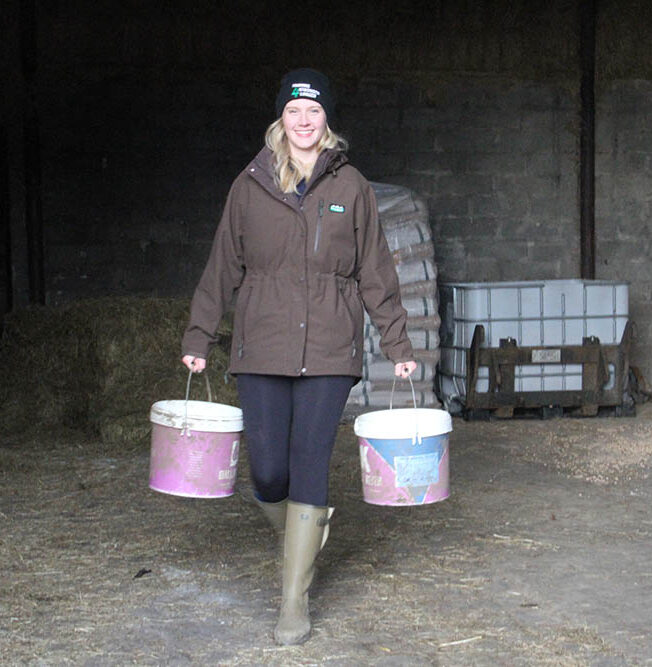
Harriet joined Ribble Valley TaAF team as the lead for Long Term Health Conditions. With the support of a team that valued her experience and input, Harriet soon became involved in a project still in its early days, one that aligned with her farming roots and focused on improving the long-term health of the farming community: Farming Stronger 4 Longer (FS4L).
“it’s a community that I’m in and I’m passionate about, and it’s something that I really love and love doing.”
Harriet’s role began to evolve naturally, shaped by where her energy, strengths, and lived experience aligned. Harriet found in TaAF a way of working that matched her values and her way of seeing the world, it gave her the space to step into her strengths and lead in her own way.
“it let my problem-solving brain go wild and do what it’s best at, which has been amazing. I’m no longer fighting myself.”
Farming Stock and Forward Steps
Harriet didn’t walk in with a plan, but she did bring a deep understanding of the farming community. She knew that building trust and reputation was essential. Building on the work her colleagues had started, Harriet added her own connections to strengthen and widen those relationships further. She took time to observe how farmers engaged (or didn’t), tested ideas informally at cattle sales, and asked the community directly what they would genuinely respond to.
She realised, something she’d always instinctively known, connecting with the farming community would need to take a different approach. It wasn’t so much ‘place-based’ as it was ‘community-based’, with farmers often connecting across much wider geographical areas depending on their type of farming.
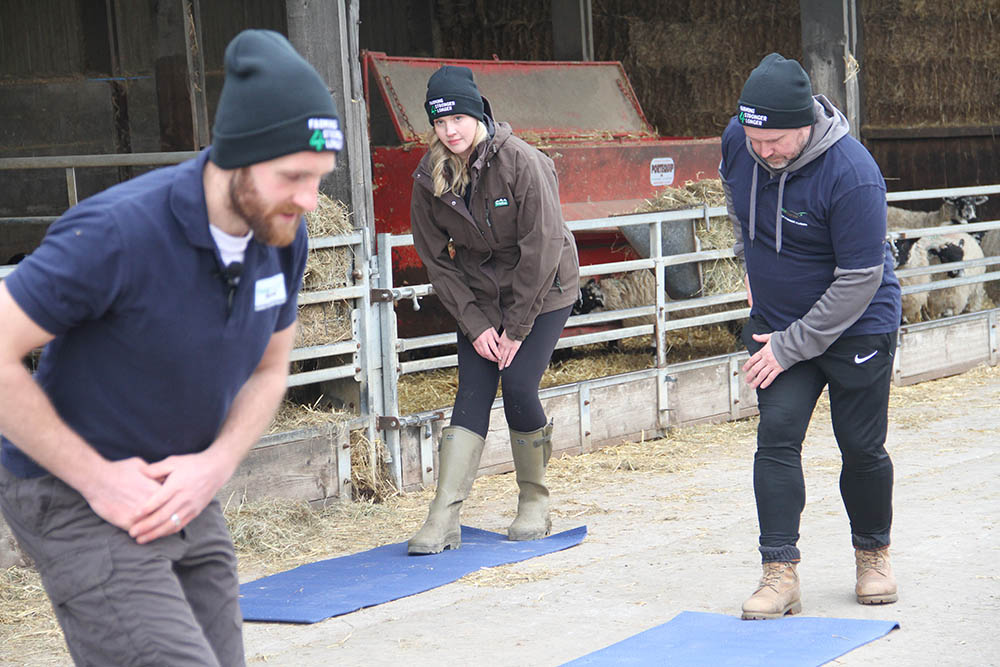
“Trying to incorporate exercises whilst on the job (farming) can be a challenge – FS4L has demonstrated how this can be done. The thing that has stuck in my head is that the farming community can be reached- it just takes the right approach, a different approach!”
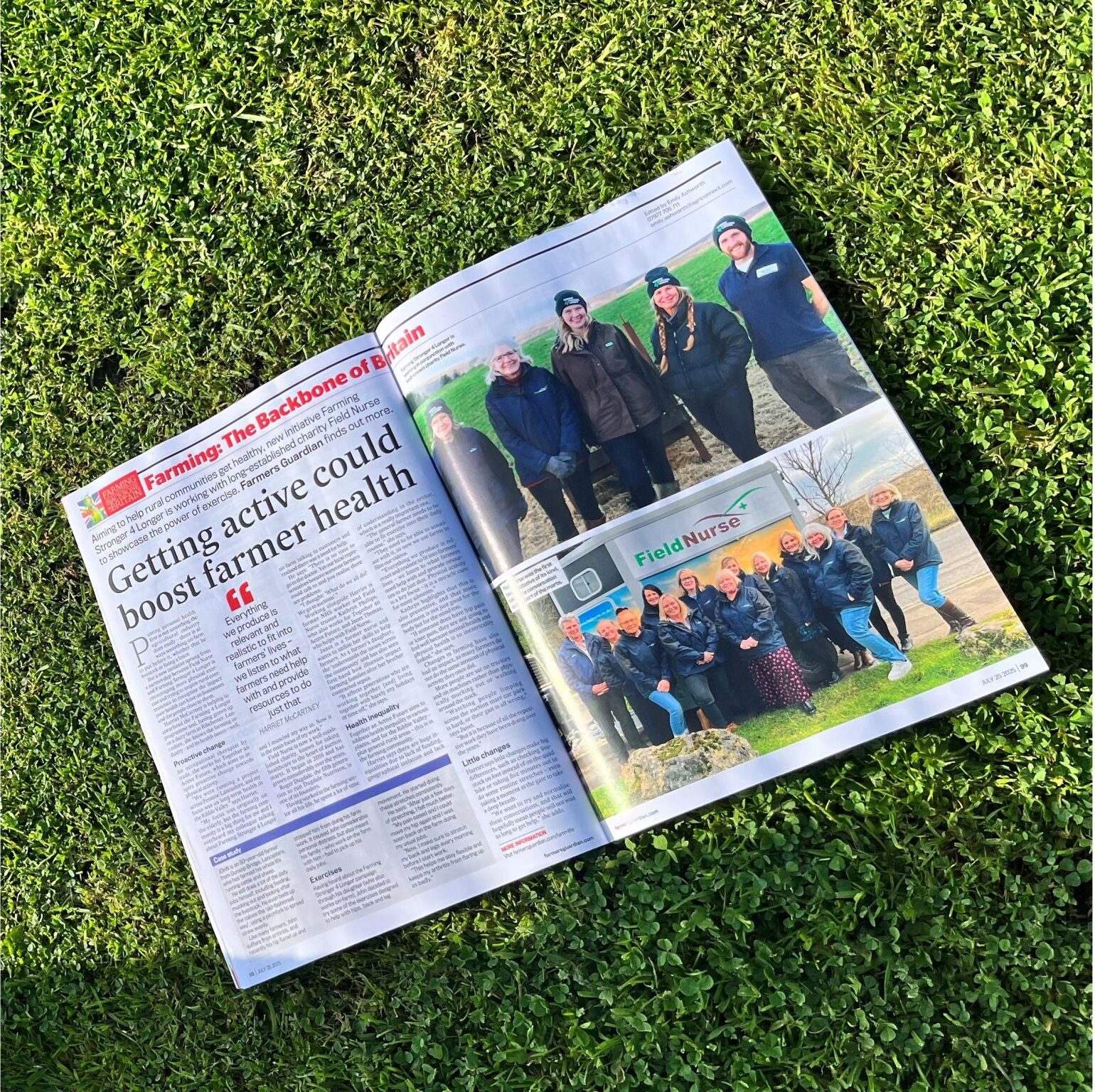 By noticing how different generations accessed information, Harriet and the TaAF Ribble Valley team created different ways to engage: a printed booklet for older farmers, a social media campaign supported by video for younger generations, with plans to launch a podcast in the near future. Alongside real-life case studies, showing how movement can fit into farming life, the work has gained national attention, including a feature in Farmers Guardian. Feedback has been incredibly positive and really connected with the farming community, one 83 year old farmer read the article and made a special trip to speak to the Field Nurses at the livestock auction mart, asking how he could start getting fitter. He left with a booklet, got in touch with the team, and is now on his own journey to farming stronger, for longer!
Changing the Narrative on Farming Community Health
Harriet produced a report on her findings that sparked conversations in the Ribble Valley Health and Wellbeing Partnership*, a local forum for strategic coordination between services aiming to reduce health inequalities. It helped shift recognition that farming communities face distinct challenges. Harriet’s work is now starting to shape how those services understand the realities of farming life, its rhythms, culture, and ways of working, and how to adapt timings, attitudes, and environments to suit rural communities. Following this work, a councillor has now formally added ‘Farming’ to their portfolio of responsibilities – a clear recognition of how this work is beginning to influence the wider system.
By leading with relationships and local insight, Harriet’s work has opened up new pathways within and across systems far beyond the Ribble Valley. A strong partnership has developed with the Field Nurse Trust – a team deeply embedded and trusted within the farming community, acting as a crucial connector between farmers and the health system. Harriet and the team have built active connections with NHS teams, Lancashire Police’s Rural Task Force, Fire and Rescue services, CVS organisations, as well as trusted community groups like Lancashire and Yorkshire Young Farmers, Agricultural Societies and RABI.
These cross-sector connections are shaping new ways of working. Professionals across sectors are using FS4L insights to design better services and shape joint initiatives. Over 20 Field Nurses have received training to help them feel more confident in having conversations with farmers about physical activity and long-term health conditions, using FS4L tools and resources as part of their everyday practice. For the Field Nurse Trust, FS4L has added a preventative health focus to their model, helping unlock new funding opportunities.
FS4L resources are now in circulation across England – shared by the Field Nurses, the Livestock Auctioneers Association, and Harper Adams University, who’ve promoted it across their student and alumni networks. There’s also growing support and visibility through platforms like Farmers Guardian, which continue to amplify the work.
“What began as a local project is now helping systems see, hear and respond to farming communities. It’s already reaching more people than I expected – and it’s only just getting going.”
Looking back, moving differently
Looking back, Harriet says if she’d done a personality test before and after this journey, the results would be unrecognisable. She’s shifted from being a cog in someone else’s machine to driving the mechanism herself. She’s now a go-to for advice on farming and wellbeing in the Ribble Valley. More than that, she’s found her spark:
“I think the biggest thing will be the confidence that it’s given me and the drive to follow my passion. I can’t ever see myself going back into my old roles. I want to do something that I’m passionate about and that I love, and this is it.”
Becoming the change
Through working in a way where learning together, building trust, and doing things differently are at the core, Harriet has moved from feeling like she had to fit in to knowing she can lead with instinct, creativity, and connection. Her mindset has shifted, her confidence has grown, and her skills have deepened. The change in her, how she works, leads and relates, has helped spark change in the system around her.
What began as a local project is now driving national change. FS4L has expanded into auction marts nationwide with the Livestock Auctioneers Association and DEFRA-supported training modules with the Institute of Agriculture and Horticulture, while Harriet continues to bridge practice and research.
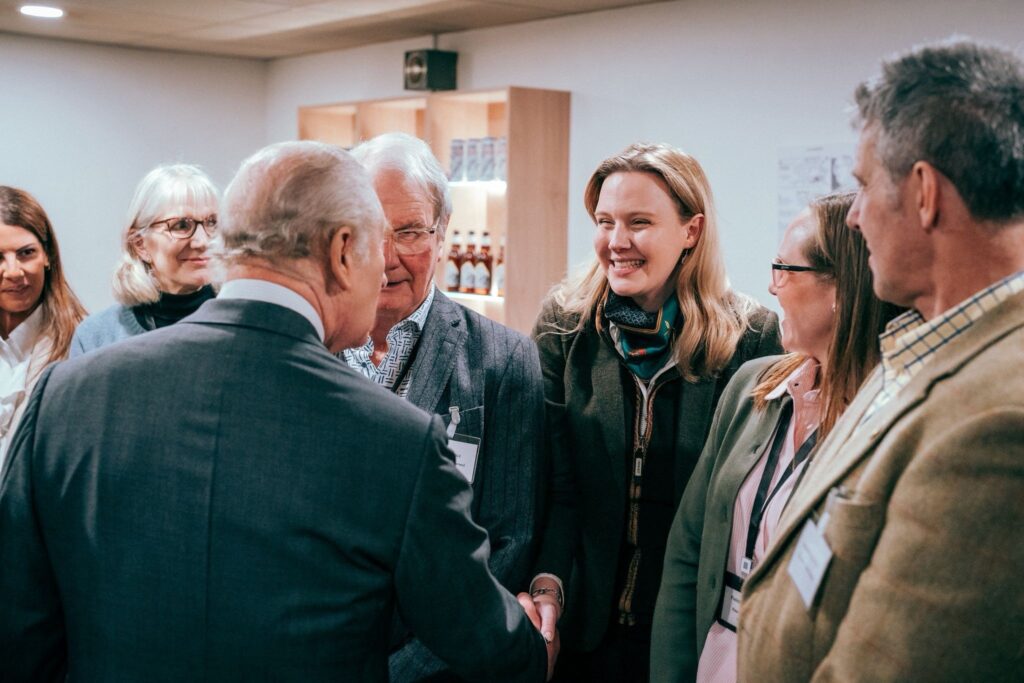
Having completed her Master’s in Public Health, she is advancing her PhD, running her occupational therapy practice Acre & Antler, and was recently awarded a Churchill Fellowship to study international rural health models in Australia, New Zealand, and Norway. From presenting her work to HM King Charles III to expanding support networks on the ground, Harriet continues to demonstrate that taking a different approach can transform healthcare for the farming community.
For further information about this work, email harriet.mccartney@ribblevalley.gov.uk
To keep up to date with Harriet’s amazing work, please connect with her on LinkedIn.
Harriet was employed through TaAF’s Shared Role Model – working full-time on TaAF priorities while being hosted by Ribble Valley Borough Council. The model brings the benefit of being embedded within an existing system, creating opportunities for connection and collaboration. The TaAF way working can be seen, understood, and valued on a larger scale, helping to inspire further shifts in approaches and mindsets over time. Read more about our Shared Role model here.