

At the heart of our work at TaAF is the belief that when people begin to change – shift their mindsets, change their approach and build new skills – they are the key to changing the systems and places around them for the better.
As we approach the end of our Accelerator funding phase, we are celebrating the people who have been on this journey with us, those who’ve not only changed themselves, but helped shape the communities and systems around them for the better.
Rachael had spent more than 20 years working in the voluntary sector, supporting people with disabilities and navigating systems that often made change feel slow. Stepping into a partnership role within TaAF felt like an exciting opportunity to broaden her work and take on new challenges.
That move gave Rachael the chance to work differently. As Partnership Manager for TaAF, she found the space to bring public, voluntary and community partners together around a shared commitment to inclusion. With her energy focused on long-term impact, she began to champion a shift away from short-term delivery towards a more relational way of working, where collaboration, reflection and doing things differently are central to creating lasting change.
 Building on Strong Foundations
Before TaAF, Rachael’s work was rooted in community and lived experience. She trained as a PE teacher, worked as a community development worker, and went on to lead a CIC supporting people with learning disabilities. Physical activity, inclusion and fairness had always been central to her work.
But the reality of working in the voluntary sector, whilst incredibly rewarding, could also be challenging and frustrating. Funding cycles were short, resources were stretched, and success was often measured in outputs.
“You know you’re doing good work, but it doesn’t change things permanently for anybody.”
Rachael knew that supporting people one by one would never be enough if the conditions around them stayed the same.
A new way of working
Joining TaAF gave Rachael space to slow down and look at the bigger picture. Rachael was given space to focus on how change happens. There were no rigid targets or KPIs driving the work. Instead, the emphasis was on relationships, learning and approach.
At first, that felt unfamiliar, even a bit uncomfortable.
“I remember thinking, is this actually work?”
But the value of that space soon became clear. Working alongside people from local authorities, health, leisure and national organisations helped Rachael see things differently. She began to understand the shared pressures everyone was under, and how rarely people were given the time to connect, reflect or work across boundaries.
“It’s not that people don’t care… they just haven’t got the breathing space and the time to even look up.”
That shift in mindset marked a turning point, both in how Rachael saw the system and in how she chose to work within it.
Through TaAF’s strengths-based coaching, Rachael also began to see herself differently. Understanding her strengths, particularly her ability to generate ideas and connect people, helped her lean into her natural strengths.
That confidence showed up not just in her own leadership, but in how she supported others, creating space for different voices and experiences to be valued.
 From Conversation to Change
Rachael challenged a gap she noticed early on: decisions about inclusion were often being made without enough lived experience in the room. Instead of accepting that as “how things are done,” she worked with partners to change it.
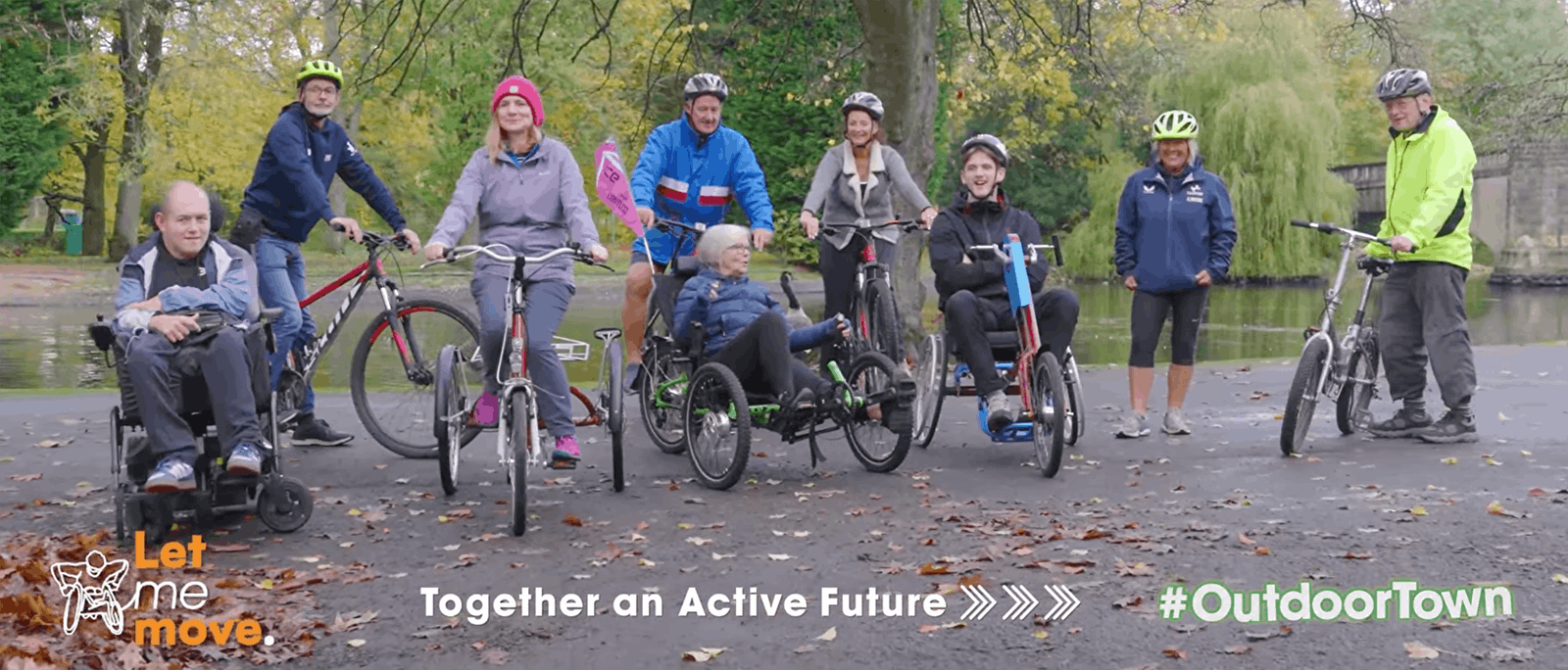
She championed a new workstream, Let Me Move, in collaboration with Activity Alliance. The work focused on developing a deeper understanding of the barriers disabled people face within physical activity settings.
Through this work, she:
• brought colleagues with lived experience of disability into the TaAF workforce
• established a group of paid Accessibility Advocates, recognising lived experience as expertise
• worked with partners to redesign roles, hosting arrangements and budgets so inclusion was built into the system
Through Rachael’s leadership of Let Me Move, inclusion began to shift from something discussed in principle to something built into how the system works. Lived experience moved into decision-making spaces, with disabled people paid for their expertise and shaping work from the outset, not consulted at the end.
Partners began changing how they recruit, design roles and make adjustments, with organisations like Burnley Leisure & Culture employing disabled people for the first time and embedding accessibility into their business plans.
Partnership work has included the Canal & River Trust, British Cycling and local authorities, where discussions and collaboration have led to practical adaptations in parks, theatres and leisure facilities. The work also included changing how accessible routes are understood and communicated through supporting partners to rethink their approach to accessibility.
Across sectors, Rachael’s conversations helped shift mindsets and behaviours from “that will cost too much” to “what small changes can we make now?”, giving partners the confidence to act, learn and do things differently.
Connecting the work
TaAF’s working structure has given Rachael the space to work in a way that feels right for her:
“I’m very interested in learning about what’s going on and who’s who. I’ve always wanted to work like this. Having the space to learn, connect and really understand what’s going on makes such a difference.”
This shows up in how she works day to day. Rachael has helped facilitate Curiosity Clubs and learning spaces within TaAF, and regularly uses reflection to guide next steps across workstreams, keeping the work grounded in people’s lives.
Over time, she has learned to sit with complexity, and to trust that small, relational shifts can unlock bigger, longer-term change.
Change in me
Through new skills, shifts in how she saw herself, and new ways of working, Rachael has become a trusted leader, bridge-builder and advocate for inclusion. Through her cross-sector and locality work, she is redefining how individuals, organisations and systems see their role in enabling movement – particularly for those who are too often excluded.