
The latest release of the Sport England Active Lives survey data provides an intriguing snapshot of physical activity levels across the six districts of Pennine Lancashire. This data offers valuable insights into how different regions are progressing in terms of promoting physical activity and reducing inactivity within their communities.
Trends in physical activity and inactivity across Lancashire over the past three years
Physical Activity Levels
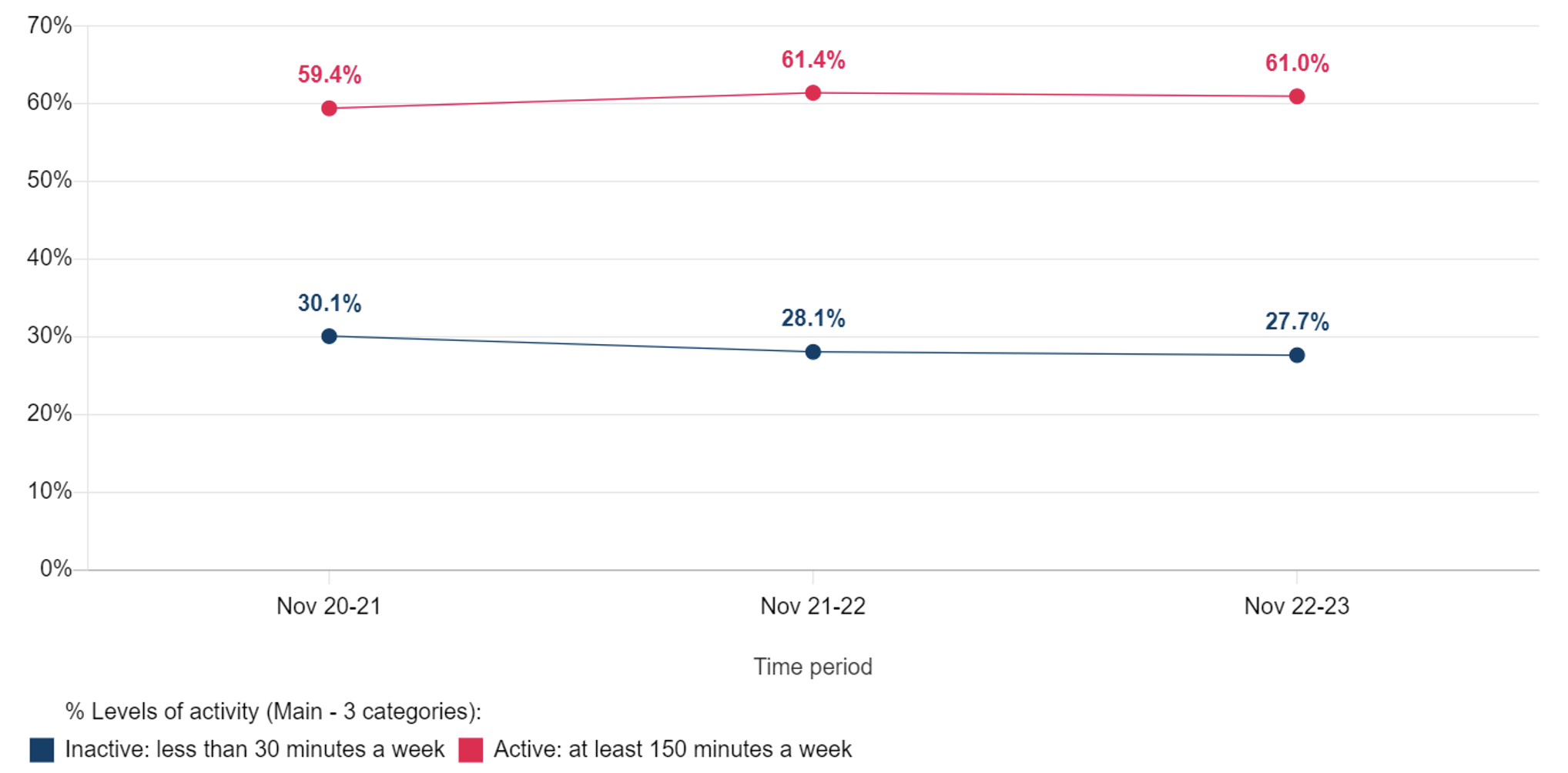
The most recent Active Lives data reveals several notable trends in physical activity levels across the districts of Pennine Lancashire. Three districts have shown notable increases in adults being physically active (participating in at least 150 minutes of physical activity per week). The latest data suggest that Blackburn with Darwen has seen a positive shift, with 58% of the population now classified as physically active, up by 4.6% from the previous year. Pendle and Rossendale also showed positive increases, with Rossendale showing a notable rise of 6.3%, bringing the percentage of physically active residents to 69%. In contrast, in Burnley 55% of the population are physically active, showing a slight decrease of 1.3% compared to the previous year. Similarly, Hyndburn and Ribble Valley also experienced slight decreases, with 57% and 71% of their populations being physically active. Comparatively, across the whole of Lancashire, 61% of the population are classified as physically active, reflecting a very small reduction from the previous year.
Levels of Physical Inactivity
In addition to physical activity, the recent Active Lives data also reports trends in physical inactivity. Some districts have shown notable decreases in adults who are inactive (participating in less than 30 minutes of physical activity per week). In Pendle there was a substantial decrease in physical inactivity rates, which fell from 35% to 29% of the population. Similarly, Rossendale had a reduction in inactivity, bringing the percentage of inactive residents to 23%. Blackburn with Darwen also saw a notable decrease in physical inactivity of 6.4%, with 31% of the population now inactive. In contrast, Burnley saw an increase of 4.4% from the previous year with 35% of the population being inactive. Hyndburn and Ribble Valley also experienced an increase in physical inactivity by more than 4% of their respective population. For Lancashire as a whole, 27.7% of the population were reported as inactive, showing a decrease of 1.4% from the previous year. This reduction suggests that regionally efforts to reduce inactivity have made some impact.
Find out more about the Active Lives data: https://www.sportengland.org/research-and-data/data/active-lives
While the Sport England Active Lives survey provides valuable insights into physical activity levels, it’s important to recognise its limitations, especially at the district level. The survey samples just 500 residents per district annually and is likely to underrepresent certain groups such as ethnic minorities. Additionally, the survey relies on self-reported data, which can lead to overestimations of physical activity levels. Despite these limitations, the insights can support stakeholders to better address the needs of their communities, encouraging a more active and healthy population.
Written by Dr Oliver Hamer, Research and Insights Associate.